
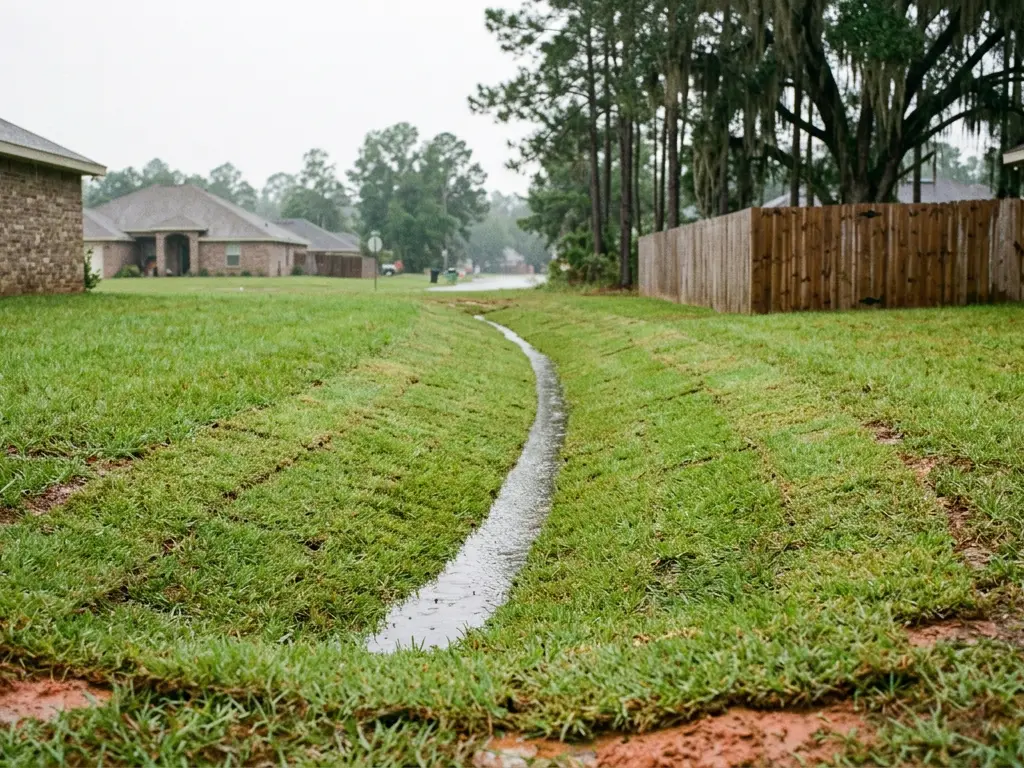
Shaping the ground so water leaves on its own
Tallahassee Yard Drainage Yard Grading and Regrading in Tallahassee
The cheapest drain is the one you never have to bury. Regrading reshapes the surface so rain runs away from the house and off the lot the way it should have from the start.
- Tallahassee, Bradfordville and Crawfordville
- Written price before any digging
- Licensed, insured local contractors
- Priced for Red Hills clay and karst sand
Tallahassee Yard Drainage arranges yard grading and regrading for Tallahassee homeowners whose lots slope the wrong way. On a large share of drainage calls, the ground itself is the problem: it falls toward the house, holds a bowl in the middle of the lawn, or has been built up with mulch and beds until the water has nowhere to go but the slab.
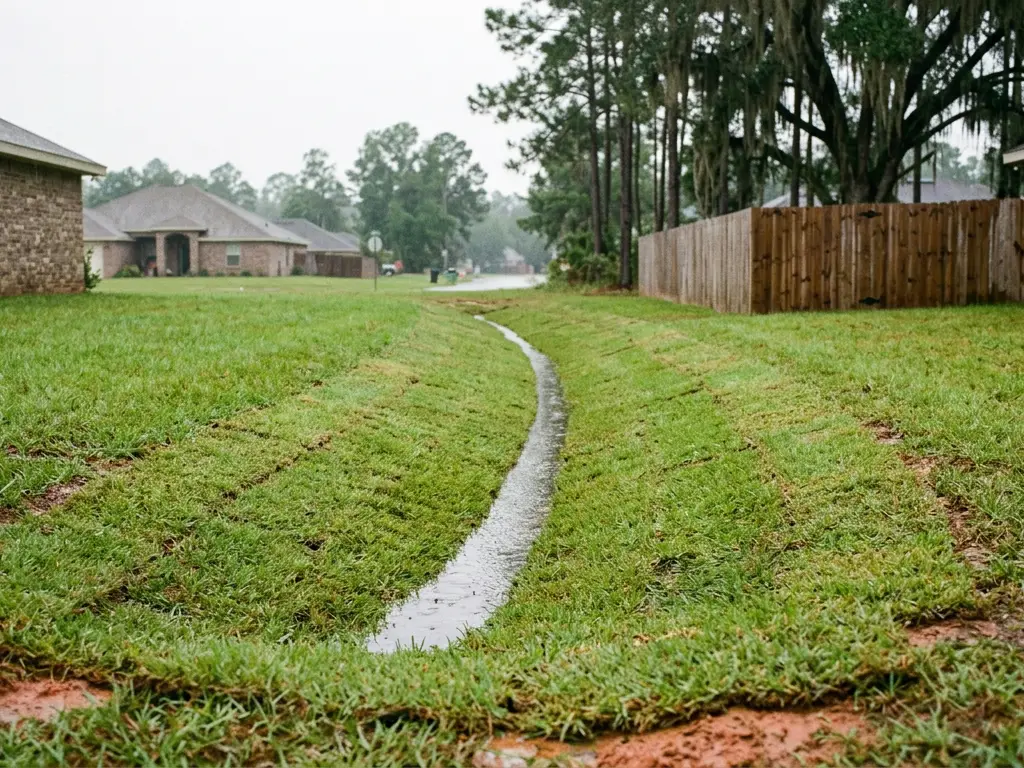
A regrade usually costs $1,500 to $6,000 and needs no maintenance; burying a $7,000 French drain to fight water that a correctly sloped lawn would have shed on its own is paying twice for the same rain.
$1,500 to $6,000 for most residential regrades
Yard regrading in Tallahassee typically runs $1,500 to $6,000. Re-sloping the strip along one side of a house sits at the low end. Reshaping a back yard with imported fill, new sod and a swale sits at the high end. Fill material, access for equipment and how much sod has to be replaced move the price most.
Get a price: (850) 604-5871Signs the grade is working against you
- Rain runs toward the house instead of away from it
- Beds and mulch sit higher than the slab edge
- A bowl in the lawn that fills every storm
- Water from the patio or driveway flows back toward the house
- Soil has settled into a trench along the foundation
The numbers grading works to
Near the house, the ground should fall about six inches over the first ten feet, a slope of roughly five percent. Florida's residential building code sets the same basic idea for new construction. Beyond that zone, lawn areas drain well at one to two percent, which is barely visible to the eye but enough to move water across grass.
Steeper than about three to one on a bank and the soil starts to wash, which is where erosion control takes over. Flatter than about one percent and water lingers. The job is to fit the whole lot between those numbers and still land the water somewhere legal.
Why Tallahassee lots lose their grade
Builders grade a lot once, compact it and sod it. Over the next few years backfill beside the foundation settles, sometimes by several inches, leaving a trench that collects water right where it does the most harm. Homeowners add beds, mulch every spring, pour a patio at the wrong pitch, and the neighbor regrades next door. In the Red Hills the terrain is rolling, so even a small change can redirect water from half an acre uphill.
Not sure which of these your yard needs? Describe it on the phone and get a straight answer.
Call (850) 604-5871How a regrade is done
The lot is shot with a laser level or transit so the high and low points are measured rather than guessed. Sod is cut and rolled where it can be reused. Topsoil is stripped, the subgrade is shaped, fill is brought in where needed and compacted in layers, and topsoil goes back on top. New sod or seed goes down last.
Fill quality matters here. Clean screened topsoil over the shaped subgrade gives grass a chance; dumping red clay spoil on a lawn and sodding over it produces the same drainage problem a few inches higher.
Grading that respects the neighbors
Raising your yard sends water somewhere, and Florida's reasonable-use rule means you can be liable if that somewhere is unreasonably your neighbor's lot. A regrade plan should show where the water goes after it leaves your lawn: a swale to the street, a ditch, or a catch basin. In the Bradfordville area, stricter county stormwater standards apply to development, and anywhere near the right of way the city or county has a say.
Water running toward the house?
That is almost always a grading problem, and it is often cheaper to fix than people expect. Call and describe which way it flows.
Call (850) 604-5871Questions people ask
How much does it cost to regrade a yard in Tallahassee?
Typically $1,500 to $6,000, from re-sloping one side of a house to reshaping a back yard with fill, new sod and a swale.
How much slope do I need away from my house?
About six inches of fall over the first ten feet from the foundation, then one to two percent across lawn areas.
Is grading better than a French drain?
When the problem is surface water, usually yes: it is cheaper and needs no maintenance. A French drain is for water moving through the soil.
Do I need a permit to regrade my yard?
Minor regrading on your own lot usually does not, but work that changes drainage onto a neighbor or into the right of way can. Check with the City of Tallahassee or the county before large jobs.
What are the signs my yard needs regrading?
Water running toward the house, beds higher than the slab, a bowl in the lawn that fills every storm, and settled soil along the foundation.
Often done together
-
Drainage swales
A swale is a shallow, gently sloped channel in the lawn. It moves a summer storm's worth of surface water across a yard without a single buried part to clog.
-
Standing water in the yard
A puddle that forms in the same spot every storm is telling you exactly where the problem is. The work is figuring out why it forms there.
-
Erosion control
A gully in a Red Hills yard gets deeper every storm. Filling it is not enough. The water that cut it has to be slowed down or sent somewhere else.
Talk it through before anyone digs
Describe where the water sits and where it comes from. You will hear which fix fits the yard, what it usually costs, and whether you need one at all.
Call (850) 604-5871