Tallahassee Yard Drainage Erosion Control in Tallahassee, FL
Tallahassee Yard Drainage handles erosion control and slope stabilisation across Tallahassee and the surrounding area. The rolling terrain that makes the Red Hills pleasant to look at is the same terrain that moves water downhill fast enough to take the soil along with it.
The short answer
Erosion is what happens when moving water has more energy than the ground can resist. Every fix is therefore one of two things: take energy out of the water by slowing it or spreading it, or add resistance to the ground by covering or armouring it. Tallahassee's rolling terrain supplies the slope and its rainfall supplies the volume, which is why this is a recurring problem here rather than an occasional one.
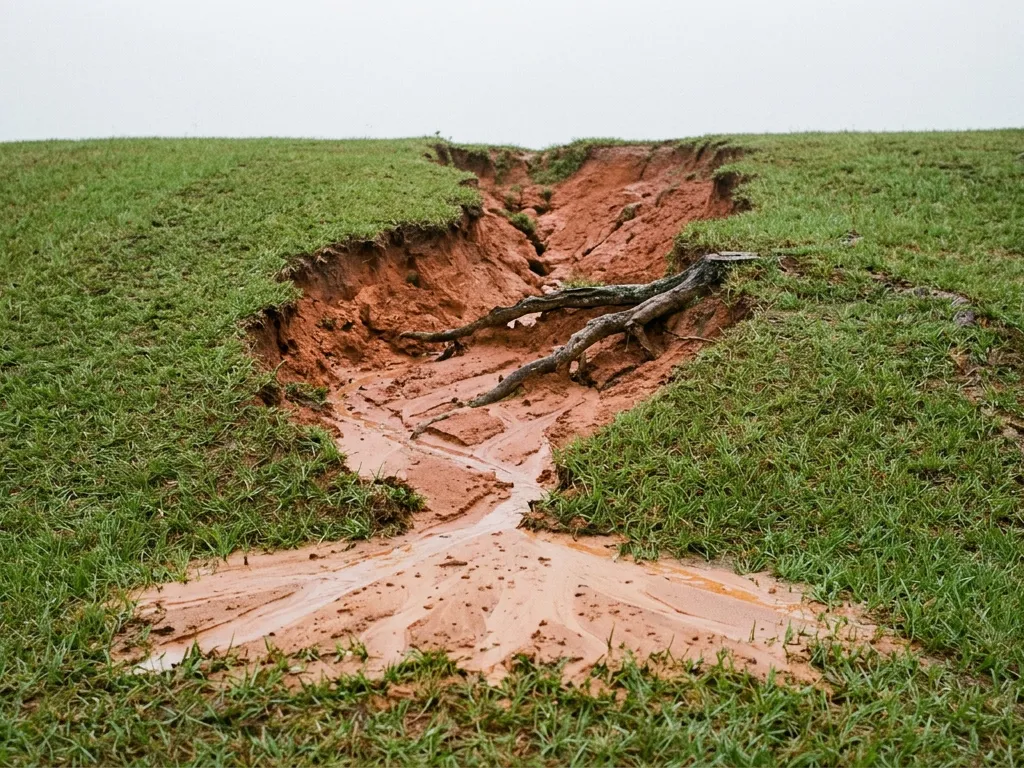
Erosion is a symptom of speed
Water gains energy going downhill and loses it on the flat, and the damage it does rises steeply with velocity rather than in proportion to it. This is why a slope that has been stable for years starts losing ground after a driveway, a roof extension or a neighbouring development sends more water across it faster. The slope did not change. The delivery did.
It is also why the first question on an eroding slope is what changed upstream, not what to put on the slope. Fixing the surface while leaving the cause running produces a repair with a short life and a predictable second visit.
Slowing water down versus armouring the ground
Slowing water is generally cheaper and usually looks better: reducing the pitch by regrading, breaking a long slope into shorter runs, spreading concentrated flow back out, or routing it into a swale where it can travel at a survivable speed. Where this is possible it is the better engineering.
Armouring is for where the energy cannot be removed: rip rap in a channel, a retaining wall to eliminate the slope, or rock lining where flow concentrates. It is more expensive and more visible, and it is the right answer when the alternative is losing ground every season.
Bare Red Hills clay is unusually vulnerable in the window between losing its cover and gaining new cover. It sheds water rather than absorbing it, so a stripped clay slope erodes considerably faster than the equivalent sandy one, which is why the sequencing below matters.
Matting, cover and the first ninety days
Erosion control matting is the workhorse: rolled over prepared soil, pinned, and either seeded through or sodded over. It holds the surface during the period when new roots have not yet taken hold, which is exactly when a slope is most likely to be tested by a storm.
The first ninety days decide whether the fix holds. Established ground cover with real root structure is genuinely strong; the same planting at three weeks is decoration. Work scheduled just ahead of the wettest part of the year takes that risk knowingly, and matting is what covers the gap.
Where the erosion is fed by a defined channel of water rather than general sheet flow, stabilising the slope without giving that channel a designed route simply moves the damage a few feet downhill.
Timing it against the season
Erosion work is unusually sensitive to when it happens, because most of the methods depend on establishing plant cover and cover takes time that a storm will not wait for.
Work done going into the driest part of the year has the best chance: matting goes down, cover establishes through it, and by the time serious rain arrives there is root structure holding the surface. Work done immediately before the wettest months is still worth doing, but it leans much harder on the matting and the structural elements, because the planting is decoration until it has rooted.
Where a slope is actively losing ground now, none of that is a reason to wait. Matting pinned over bare soil stops the bleeding immediately and can be followed by the fuller correction at a better time of year.
Signs this is your problem
- Bare channels are forming and widening down a slope
- Roots are becoming exposed around trees or shrubs
- Soil, mulch or rock collects at the bottom of a grade after storms
- A slope near a driveway, wall or foundation is visibly losing ground
Erosion control: questions
What is the fastest way to stop a slope eroding right now?
Matting pinned over the bare area, ideally before the next storm, with cover established through it. It stabilises the surface immediately and buys the time needed to plan whatever larger correction the slope actually needs.
Do I need a retaining wall?
Only where the grade cannot be reduced and the flow cannot be redirected. Walls are the expensive answer and they bring their own requirement, which is drainage behind them. Regrading and cover resolve a great many slopes that were quoted as wall jobs.
Why is my slope eroding when it never used to?
Something upstream is usually delivering more water, or delivering it faster or more concentrated: new hardscape, a rerouted downspout, a neighbouring build, or ground cover that has thinned. Finding that change is more productive than resurfacing the slope.
Will grass alone hold a slope?
Established grass with deep roots holds a moderate slope well. Grass on a steep slope, or grass taking concentrated flow rather than sheet flow, generally does not, and needs matting beneath it at minimum.
Is erosion control the same as drainage work?
Related but distinct. Erosion control keeps soil where it is; drainage decides where water goes. Doing the first without the second usually relocates the problem rather than solving it, which is why they are quoted together more often than not.
Find out what is actually wrong
Describe where the water sits and how long it stays. The yard gets walked, the cause gets found, and a written price comes before anything is dug.
Site visits by appointment