
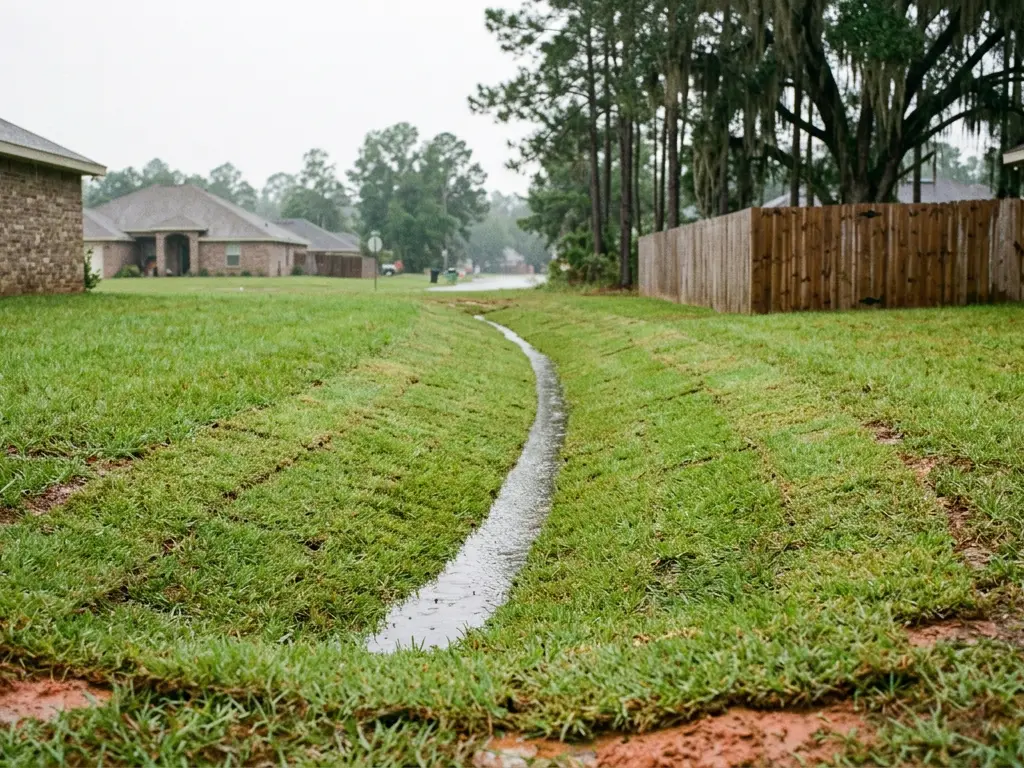
A grass channel that carries what a pipe cannot
Tallahassee Yard Drainage Drainage Swale Installation in Tallahassee
A swale is a shallow, gently sloped channel in the lawn. It moves a summer storm's worth of surface water across a yard without a single buried part to clog.
- Tallahassee, Bradfordville and Crawfordville
- Written price before any digging
- Licensed, insured local contractors
- Priced for Red Hills clay and karst sand
Tallahassee Yard Drainage arranges drainage swale installation for Tallahassee homes where surface water runs across the yard in sheets, pours off an uphill neighbor, or collects along a fence line. A swale is the surface-water answer: it catches water as it flows over the ground and guides it, above ground, to somewhere it can leave the lot.
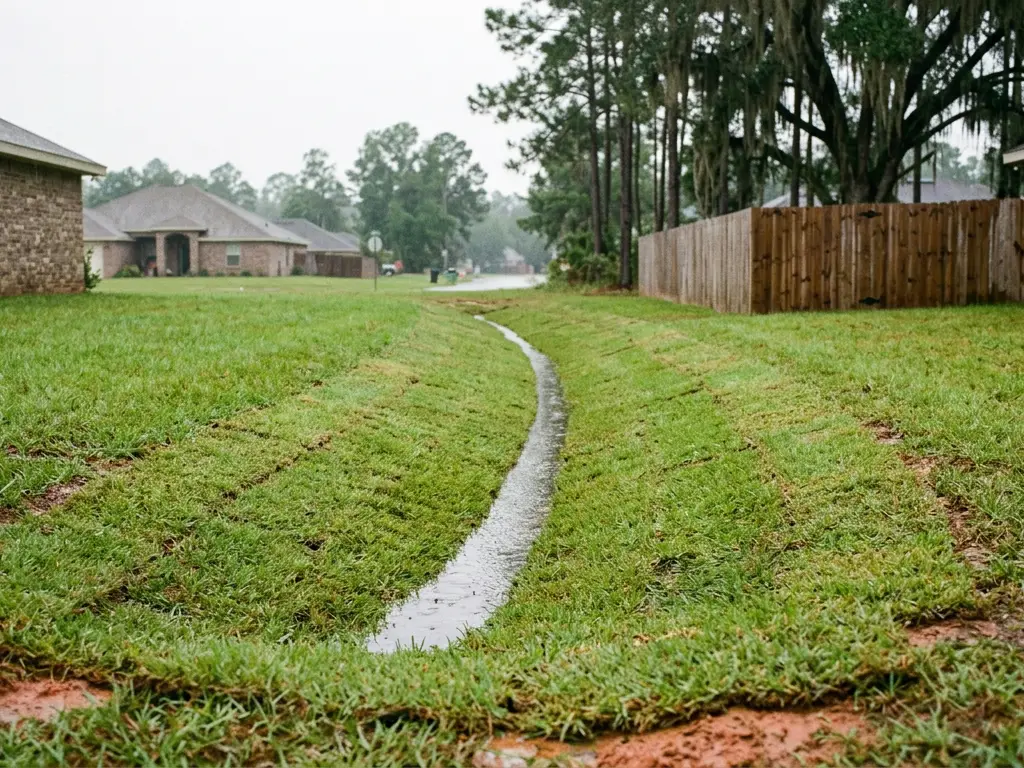
A well-shaped swale typically costs $1,500 to $5,000 and has nothing to clog; trying to push the same summer sheet flow into a pipe means a $6,000 buried system that overflows in the first two-inch thunderstorm anyway.
$1,500 to $5,000 for most residential swales
Drainage swale installation in Tallahassee typically runs $1,500 to $5,000. A short grassed swale along one side yard sits at the low end. A long swale across a back yard, with imported topsoil, new sod and a rock-lined outlet or culvert, sits at the high end.
Get a price: (850) 604-5871When a swale is the right tool
- Water flows across the lawn in a sheet during heavy rain
- An uphill neighbor's runoff crosses your yard every storm
- Water collects along a fence or a side yard between two houses
- A French drain overflows at the surface during big storms
- Mud washes across a walkway or driveway from the lawn above it
Shape, not depth
A good residential swale is wide and shallow, often three to six feet across and only six to twelve inches deep, with gently sloped sides that a mower can cross. It falls along its length at around one to two percent. That shape slows water down, keeps it in the channel and lets grass protect the soil.
A narrow, deep ditch carries water faster but erodes, is hard to mow and becomes a hazard. The aim is a feature most visitors would not notice until it rains.
Why swales suit the Red Hills
Tallahassee's rolling terrain, from downtown to Bradfordville, means most lots receive water from somewhere uphill. In a July thunderstorm that runoff arrives faster than the red loam can absorb it, and the clay-enriched subsoil below slows absorption further. A swale does not need the ground to absorb anything. It simply carries the water past the house.
Swales pair naturally with regrading: the lot is reshaped so water flows to the swale, and the swale carries it to the street, a ditch or a lower part of the property. See yard grading.
Not sure which of these your yard needs? Describe it on the phone and get a straight answer.
Call (850) 604-5871Lining and outlet
Most swales are lined with sod. St. Augustine and centipede are common in Tallahassee; sod establishes faster than seed and protects the soil immediately. Where the slope is steeper or the flow heavier, erosion-control matting under the sod, or a rock lining through the steepest section, keeps the channel from cutting. Where appearance matters, a dry creek bed is a swale lined with river rock.
The outlet is where swales succeed or fail. A swale that ends at a fence or in the middle of the neighbor's lawn has moved the problem, not solved it. Outlets to a roadside ditch or a curb involve the right of way, which is regulated by the City of Tallahassee, Leon County or Wakulla County depending on the address.
Swale or French drain?
Surface water that you can watch flowing is swale work. Water that rises from the ground or keeps the soil soggy after the surface is dry is French drain work. Plenty of yards need both: a swale to carry the storm, and a drain beneath it to dry out the soil. The longer comparison is in our guide, French drain vs swale.
Runoff pouring across the yard from next door?
A swale is usually the cleanest way to carry it past the house. Call and describe where it enters and where it goes.
Call (850) 604-5871Questions people ask
How much does a drainage swale cost in Tallahassee?
Typically $1,500 to $5,000, from a short sodded swale along one side yard to a long back-yard swale with a lined outlet.
How deep should a drainage swale be?
Usually only six to twelve inches deep but three to six feet wide, with gentle sides you can mow across.
What slope does a swale need?
Around one to two percent along its length, enough to keep water moving without cutting the soil.
Is a swale better than a French drain?
For surface water flowing across a yard, usually yes. For soggy soil and water rising from the ground, a French drain does the job. Many yards use both.
What are the signs I need a drainage swale?
Sheet flow across the lawn in heavy rain, a neighbor's runoff crossing your yard, water pooling along a fence, and French drains that overflow in big storms.
Often done together
-
Yard grading
The cheapest drain is the one you never have to bury. Regrading reshapes the surface so rain runs away from the house and off the lot the way it should have from the start.
-
Dry creek beds
A dry creek bed is a swale lined with river rock. It carries storm water where grass would wash out, and on a dry day it looks like it was always there.
-
Erosion control
A gully in a Red Hills yard gets deeper every storm. Filling it is not enough. The water that cut it has to be slowed down or sent somewhere else.
Talk it through before anyone digs
Describe where the water sits and where it comes from. You will hear which fix fits the yard, what it usually costs, and whether you need one at all.
Call (850) 604-5871