
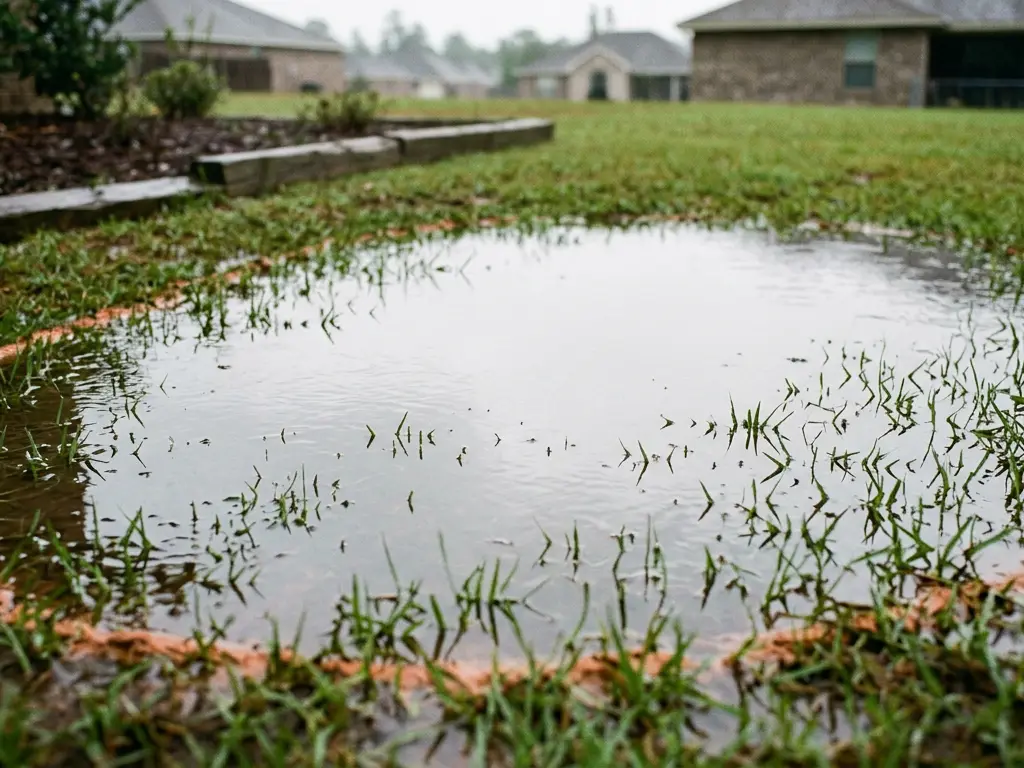
For the puddle that is always in the same place
Tallahassee Yard Drainage Standing Water Fixes in Tallahassee
A puddle that forms in the same spot every storm is telling you exactly where the problem is. The work is figuring out why it forms there.
- Tallahassee, Bradfordville and Crawfordville
- Written price before any digging
- Licensed, insured local contractors
- Priced for Red Hills clay and karst sand
Tallahassee Yard Drainage connects Tallahassee homeowners with local crews who fix standing water in yards, from a single low spot by the patio to a back lawn that turns into a pond every July. Standing water has only a handful of causes, and each one has a different fix, so the first job is working out which one you have.
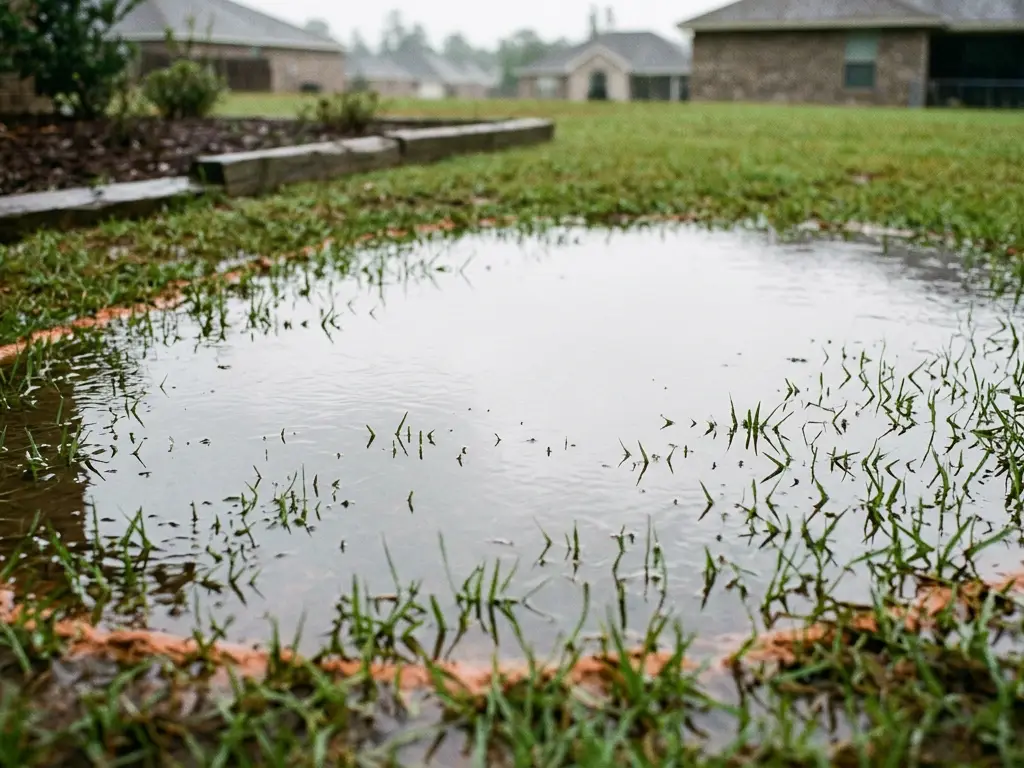
Fixing a persistent low spot usually costs $1,500 to $8,000; leaving it lets water sit against the slab and the fence posts, drowns the grass, breeds mosquitoes all summer and, near the house, turns into $15,000 of foundation and framing work.
$1,500 to $8,000 depending on the cause
Fixing standing water in a Tallahassee yard typically runs $1,500 to $8,000. Filling and regrading a single low spot sits at the low end. A French drain or catch basin with a long pipe run to a legal outlet sits in the middle. A whole back yard on a flat lot with a high water table sits at the top.
Get a price: (850) 604-5871What you are probably seeing
- A puddle that forms in the same place after every rain
- Water that takes more than a day to disappear
- Grass that has thinned, yellowed or died in one patch
- Mosquitoes breeding near the house from May to October
- Water collecting where a patio, shed or addition was built
- The neighbor's yard drains fine and yours does not
The five causes of standing water
A low spot with no way out
The ground dips and water has nowhere lower to go. Common where a tree was removed, where a trench settled, or where the builder's grade left a bowl. The fix is regrading, or a catch basin piped to a lower outlet.
Water arriving from somewhere else
Roof water from a downspout, runoff from a driveway, or water coming off an uphill neighbor. Fix the source and the puddle often disappears.
Clay subsoil
In the Red Hills, water soaks through the loam and stops at the clay-enriched layer below. The surface stays wet for days. See clay soil drainage.
A high water table
South of the Cody Scarp, around Woodville and toward Crawfordville, the ground is sandy but the water table rises after a wet spell and there is nowhere for more water to go. Fixes there lean on surface grading and outlets rather than soakaways.
Compaction
New-construction lots are compacted by heavy equipment. Water that should soak into the top few inches cannot. Aeration helps a lawn, but on a compacted lot drainage usually needs grading as well.
Reading the puddle
Watch the spot during and after the next rain. Does water flow into it from one direction, or does it rise out of the ground? Does it disappear in hours, a day, or three days? Does it smell? Photos taken during the storm, with the direction of flow visible, are the most useful thing you can show a contractor. If water appears when it has not rained, the cause may be an irrigation leak or a broken water line rather than drainage at all.
Not sure which of these your yard needs? Describe it on the phone and get a straight answer.
Call (850) 604-5871Matching the fix to the cause
- Low spot, no outlet: fill and regrade, or a catch basin piped away.
- Water arriving from uphill: a swale or curtain drain to intercept it.
- Roof water: downspout piping.
- Clay subsoil: a fabric-wrapped French drain to a real outlet, plus grading.
- High water table: raise the grade where possible and move surface water off the lot.
Where the water can legally go
Every one of these fixes ends somewhere. Florida's reasonable-use rule for surface water means the answer cannot simply be the neighbor's yard. Tying into a street curb, a ditch or a storm inlet in the right of way needs a permit from the City of Tallahassee, Leon County or Wakulla County, depending on the address. Utilities must be located through Sunshine 811 before any digging, with at least two full business days of notice.
Standing water up against the house?
A puddle in the middle of the lawn can wait a week. One against the foundation should not. Call and tell us where it is.
Call (850) 604-5871Questions people ask
How do I get rid of standing water in my yard?
Find the cause first: a low spot, water arriving from a downspout or uphill, clay subsoil, a high water table or compaction. Then fix that cause with grading, a catch basin, a swale, a French drain or downspout piping.
How much does it cost to fix standing water in a yard?
Typically $1,500 to $8,000 in Tallahassee, from regrading one low spot to a drain system with a long pipe run to a legal outlet.
Why does water stand in my yard after rain?
In most of Tallahassee, water soaks through the red loam and stops at the clay-rich subsoil. South of town it is more often a high water table. Low spots, downspouts and compaction make both worse.
How long should water stand in a yard after rain?
A healthy lawn should be free of standing water within a few hours of a normal rain. Water that is still there the next day points to a drainage problem.
What are the signs my yard has a drainage problem?
A puddle in the same place every rain, water lasting more than a day, dying grass in one patch, mosquitoes near the house and mud washing onto hard surfaces.
Who do I call for standing water in my yard?
A drainage contractor, not a general landscaper. The fix involves grading, pipe and outlets, and the design has to respect utility locates and right-of-way rules.
Often done together
-
Clay soil drainage
Red loam on top, clay-rich subsoil underneath. Water gets through the first and stops at the second. Fixing a soggy Red Hills yard starts with knowing that.
-
Catch basins
When water collects in one spot and stays there, a catch basin gives it a door. The grate collects it at the surface and solid pipe carries it away.
-
Yard grading
The cheapest drain is the one you never have to bury. Regrading reshapes the surface so rain runs away from the house and off the lot the way it should have from the start.
Talk it through before anyone digs
Describe where the water sits and where it comes from. You will hear which fix fits the yard, what it usually costs, and whether you need one at all.
Call (850) 604-5871