
For the red ground that holds water
Tallahassee Yard Drainage Clay Soil Drainage in Tallahassee
Red loam on top, clay-rich subsoil underneath. Water gets through the first and stops at the second. Fixing a soggy Red Hills yard starts with knowing that.
- Tallahassee, Bradfordville and Crawfordville
- Written price before any digging
- Licensed, insured local contractors
- Priced for Red Hills clay and karst sand
Tallahassee Yard Drainage arranges clay soil drainage work for Tallahassee yards that stay soggy long after the rain stops. Most of the city sits in the Red Hills, and the problem here is rarely the topsoil everyone sees. It is the clay-enriched layer a foot or two down that water cannot get through quickly, and every lasting fix is designed around it.
Tilling sand or compost into a soggy clay lawn feels like a $500 fix, but it creates a bathtub over the clay layer; doing it properly with grading and a drain runs $2,500 to $10,000 and ends the problem instead of moving it six inches up.
$2,500 to $10,000 for most clay drainage jobs
Clay soil drainage in Tallahassee typically runs $2,500 to $10,000. A regrade with one French drain across a soggy area sits at the low end. A lot that needs a drain, a swale and downspout piping to a distant outlet sits at the high end.
Get a price: (850) 604-5871What clay drainage trouble looks like
- Water stands in the lawn for two or three days after a normal rain
- Footprints fill with water when you walk across the yard
- Moss, algae or sedge taking over where grass used to grow
- The lawn is soggy in winter and cracked hard in a dry May
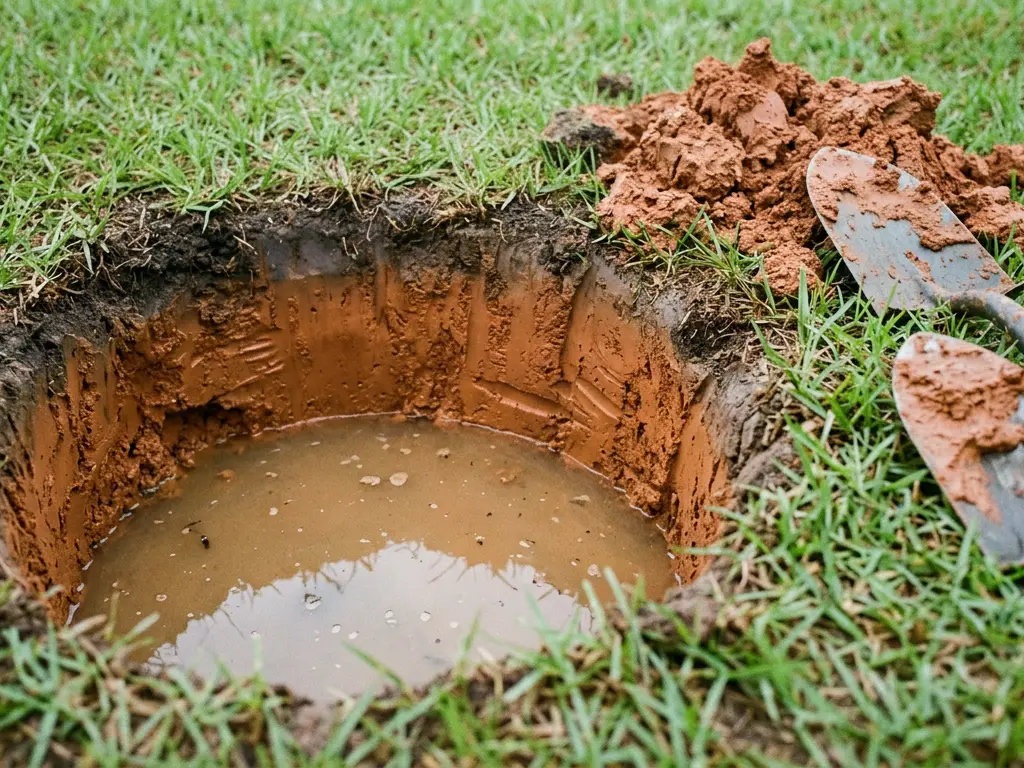
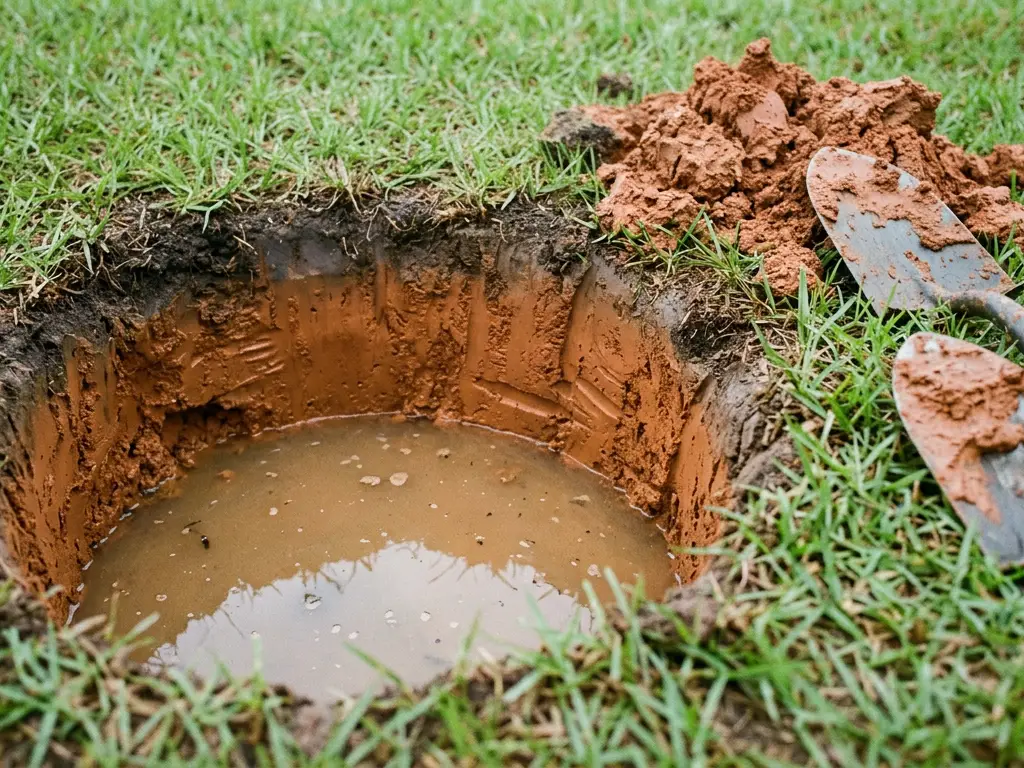
- A test hole a foot deep fills with water and stays full
What the soil survey actually says
The dominant soil of the Tallahassee Red Hills is the Orangeburg series. The USDA describes it as deep and well drained, and on an undisturbed hillside it is. The topsoil is fine sandy loam. Below it the soil becomes steadily richer in clay, the red and yellowish-red subsoil you see in every trench. That clay-enriched layer is where water slows down.
So the honest description of a Tallahassee drainage problem is not "clay that will not drain". It is loam over a slower layer, on land that has usually been graded, compacted and built on. Construction compacts the upper soil, removes topsoil, and leaves a lot shaped for the builder's convenience. That combination is what keeps a yard wet.
Testing before designing
A simple percolation check tells you a great deal. Dig a hole about a foot deep, fill it with water, let it drain, then fill it again and time how fast the level drops. Less than an inch an hour means water will not soak away there, and any design that relies on it soaking in, such as a gravel pit or a perforated emitter, will disappoint.
A good contractor digs a test hole or two before quoting a clay drainage job. If the one you talk to does not, ask why.
Not sure which of these your yard needs? Describe it on the phone and get a straight answer.
Call (850) 604-5871What works in clay
- Move water across the surface first. Regrading and swales handle volume that no buried pipe can soak away.
- Collect and carry, not collect and soak. A French drain in clay must end at a real outlet: downhill daylight, a ditch or a storm inlet.
- Wrap everything in fabric. Fine clay particles migrate into unprotected gravel and clog it.
- Pipe the downspouts. Roof water poured onto clay has nowhere to go.
- Improve the top few inches for the lawn. Core aeration and topdressing with compost help grass cope; they do not fix drainage by themselves.
What does not work
Dry wells and soakaway pits rely on the ground absorbing water, so in the Red Hills they tend to fill and stay full. Mixing sand into clay without removing the clay tends to produce something closer to brick. Adding more topsoil over a low spot raises the grass but leaves the water sitting under it. And gypsum, sold widely as a clay fix, helps mainly with sodic soils, which are not what Tallahassee has.
Yard still underwater two days after it stopped raining?
That is the classic Red Hills clay problem. Call and describe where the water sits and how long it stays.
Call (850) 604-5871North of the scarp and south of it
Everything above applies to the Red Hills: most of the city, Killearn, Betton Hills, Bradfordville and the north side. South of the Cody Scarp, around Woodville and toward Crawfordville, the ground is sand over limestone and the problem is a high water table rather than clay. Same symptom, opposite cause, different fix.
Questions people ask
How do you fix drainage in clay soil?
Move water across the surface with grading and swales, collect what soaks in with a fabric-wrapped French drain that ends at a real outlet, and pipe the downspouts away. Do not rely on the clay to absorb water.
How much does clay soil drainage cost in Tallahassee?
Typically $2,500 to $10,000, from a regrade with one French drain up to a full system with a drain, a swale and downspout piping.
Is Tallahassee soil really clay?
The red topsoil is mostly fine sandy loam, and it drains reasonably well. The subsoil below it is enriched with clay, and that layer is what slows water down.
Will adding sand fix my clay yard?
Usually not. Sand mixed into clay without removing the clay tends to set harder, and sand spread on top creates a wet layer over the clay.
What are the signs of a clay drainage problem?
Water standing for two or three days after normal rain, footprints that fill with water, moss and sedge replacing grass, and a test hole that fills and stays full.
Does a dry well work in clay?
Rarely. It depends on the soil absorbing water, and clay subsoil does not absorb it fast enough.
Often done together
-
Standing water in the yard
A puddle that forms in the same spot every storm is telling you exactly where the problem is. The work is figuring out why it forms there.
-
French drain installation
A gravel trench and perforated pipe that pulls water out of the ground and carries it somewhere it is allowed to go.
-
Yard grading
The cheapest drain is the one you never have to bury. Regrading reshapes the surface so rain runs away from the house and off the lot the way it should have from the start.
Talk it through before anyone digs
Describe where the water sits and where it comes from. You will hear which fix fits the yard, what it usually costs, and whether you need one at all.
Call (850) 604-5871