
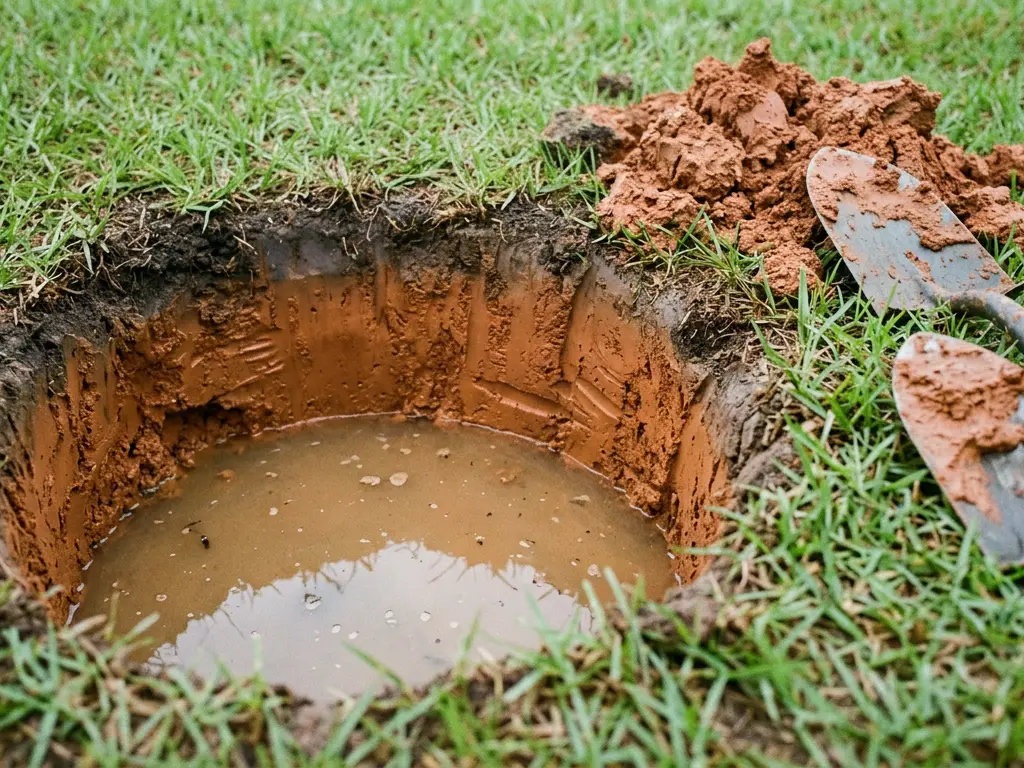
Underground storage, where the ground can drain it
Tallahassee Yard Drainage Dry Well Installation in Tallahassee
A dry well stores storm water underground and lets it soak away slowly. In the right soil it is an elegant outlet. In the wrong soil it is a buried bucket.
- Tallahassee, Bradfordville and Crawfordville
- Written price before any digging
- Licensed, insured local contractors
- Priced for Red Hills clay and karst sand
Tallahassee Yard Drainage arranges dry well installation in Tallahassee where the ground can absorb water, and says so plainly where it cannot. A dry well is an underground chamber, usually a perforated plastic tank or a gravel-filled pit wrapped in fabric, that receives water from downspouts or a drain line and releases it into the surrounding soil over hours rather than minutes.
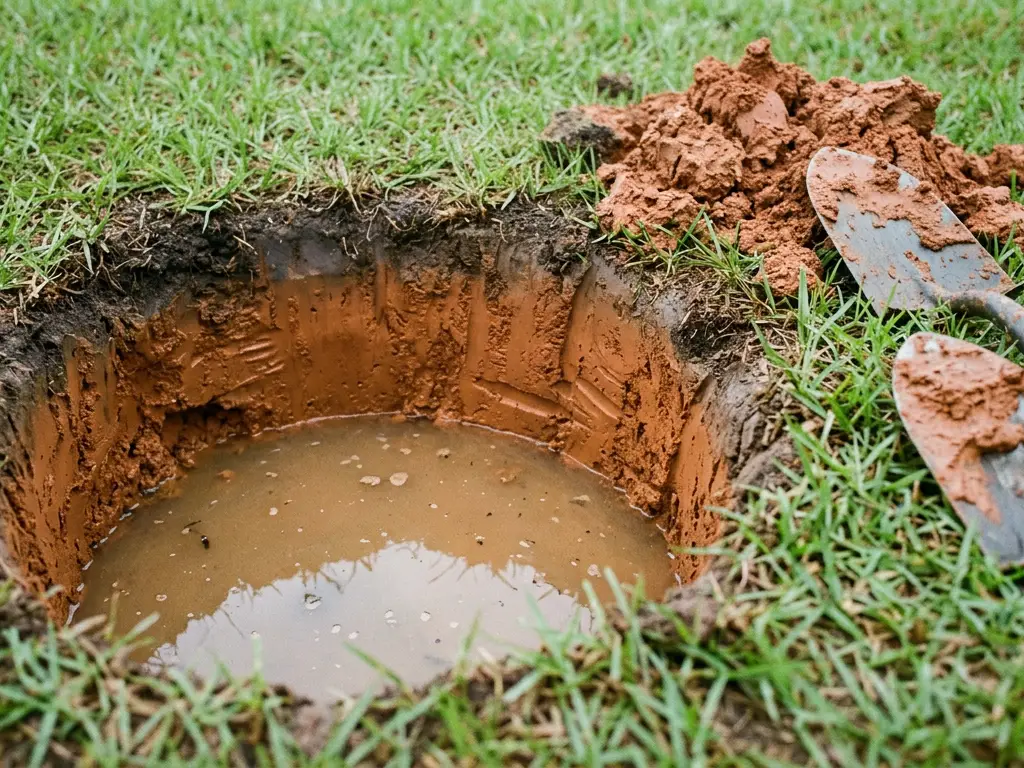
A properly tested dry well costs $1,500 to $4,500; one dug into Red Hills clay without a percolation test fills in the first storm, backs water up the downspout line and becomes a $3,000 job to dig out and replace with a real outlet.
$1,500 to $4,500 for most dry wells
Dry well installation in Tallahassee typically runs $1,500 to $4,500, depending on the size of the chamber, the length of the inlet pipe and how much soil has to be hauled away. That figure assumes a percolation test first. If the test fails, the money is better spent on a pipe to a real outlet.
Get a price: (850) 604-5871Signs a dry well is failing or was the wrong choice
- Downspouts back up and overflow at the ground joint during rain
- The overflow emitter runs in every small storm, not just big ones
- Water is still visible in the inspection port days after rain
- The ground around the well stays soggy and the grass has died back
The test that decides everything
A dry well works only if the soil around it can absorb water fast enough to empty the well before the next storm. So the first step is a percolation test at the depth the well would sit: dig, saturate, refill and time the drop. As a rough guide, soil that takes more than an hour to absorb an inch of water is a poor candidate.
Across most of Tallahassee's Red Hills, the clay-enriched subsoil fails that test. That is why this page is honest about dry wells: they are a good tool in some yards here and the wrong one in many.
Where dry wells do work locally
Sandy ground drains quickly. On the deeper sandy soils of the sandhills in parts of the area, and on some lots south of the Cody Scarp toward Crawfordville, a dry well can absorb downspout water well. The catch on the Woodville Karst Plain is the water table: in a wet season it can rise close to the surface, and a dry well sitting in groundwater cannot absorb anything. Sizing and depth have to account for the wet-season high, not a dry-day test.
The karst plain also matters for another reason. Water soaking in there reaches the Floridan aquifer quickly, which is why roof water is a better candidate for a dry well than runoff from a driveway carrying oil and fertilizer.
Not sure which of these your yard needs? Describe it on the phone and get a straight answer.
Call (850) 604-5871How a dry well is built
The pit is dug below the root-heavy top layer, lined with non-woven fabric, and fitted with a perforated chamber or filled with washed stone. Solid pipe from the downspouts or drain enters near the top. An overflow, usually a pop-up emitter at the surface, handles the storm that is bigger than the well. A removable lid or inspection port lets you check the level.
A filter or leaf trap upstream keeps gutter debris out of the chamber, because a dry well cannot be cleaned out as easily as a catch basin.
Alternatives when the soil says no
If the test fails, the water still needs to go somewhere. The usual answers are solid pipe to a pop-up emitter downhill, a swale, or a ditch or storm inlet with the right city or county permit. On flat lots, a yard sump pump can lift water to an outlet that gravity cannot reach.
Downspouts with nowhere to go?
Before anyone sells you a dry well, get the soil tested. Call and describe your lot, and we will tell you whether a dry well is even worth considering.
Call (850) 604-5871Questions people ask
How much does a dry well cost in Tallahassee?
Typically $1,500 to $4,500 including the chamber, inlet pipe and overflow, after a percolation test confirms the soil can absorb water.
Do dry wells work in clay soil?
Rarely. The clay-enriched subsoil across most of the Red Hills absorbs water too slowly to empty a dry well between storms.
How big should a dry well be?
Big enough to hold the runoff from the roof area feeding it in a heavy storm, which depends on the roof size and the soil's absorption rate. It should always have a surface overflow.
What is the alternative to a dry well?
Solid pipe to a pop-up emitter downhill, a swale, a ditch or a permitted storm connection, or a sump pump where gravity cannot reach an outlet.
What are the signs a dry well has failed?
Downspouts backing up during rain, the overflow running on every small storm, and water still visible in the inspection port days after rain.
Often done together
-
Downspout drainage
Every downspout that dumps beside the slab is pouring a roof's worth of rain into the soil your foundation sits on. This is usually the cheapest fix on the list.
-
Pop-up emitters
The green cap in the lawn that lets a buried pipe release water. When it fails, everything upstream of it fails too.
-
Yard sump pumps
Most drainage works by gravity. On a flat lot, or a yard lower than the street, gravity has nowhere to send the water. A pump lifts it out.
Talk it through before anyone digs
Describe where the water sits and where it comes from. You will hear which fix fits the yard, what it usually costs, and whether you need one at all.
Call (850) 604-5871