
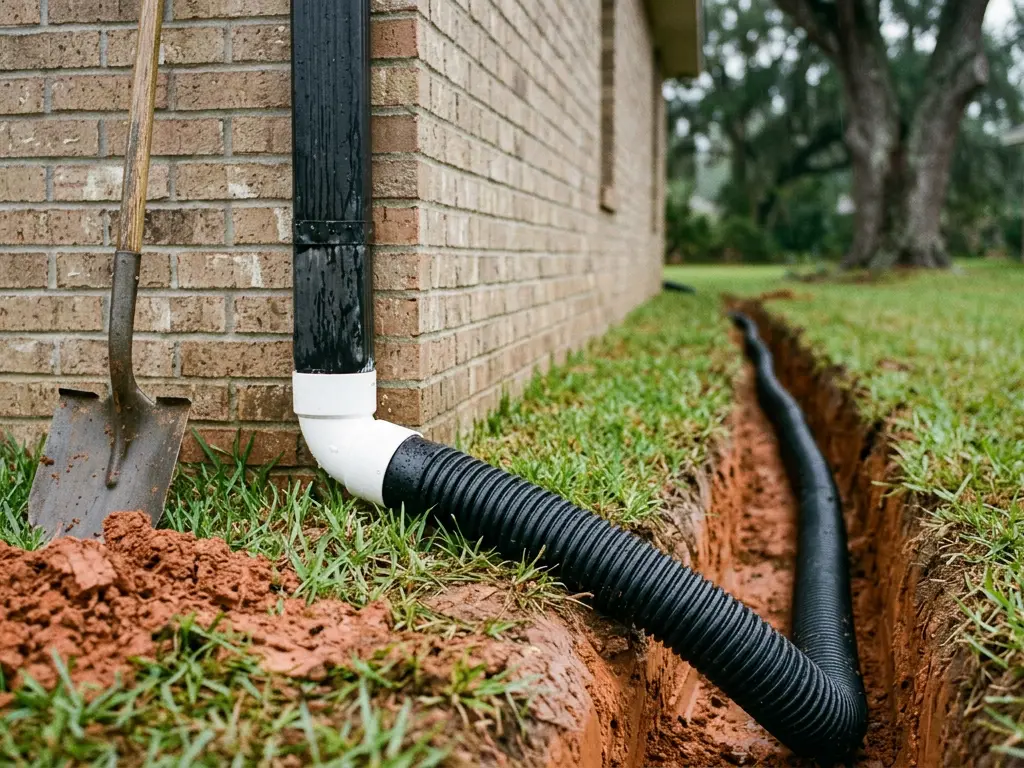
The small part at the end of every buried drain
Tallahassee Yard Drainage Pop-Up Emitter Installation in Tallahassee
The green cap in the lawn that lets a buried pipe release water. When it fails, everything upstream of it fails too.
- Tallahassee, Bradfordville and Crawfordville
- Written price before any digging
- Licensed, insured local contractors
- Priced for Red Hills clay and karst sand
Tallahassee Yard Drainage arranges pop-up emitter installation and replacement for Tallahassee homes with underground downspout lines and French drains. An emitter is a spring-loaded or hinged cap set flush with the lawn at the end of a buried pipe. When water arrives, the lid lifts and the water spreads over the grass. When it stops, the lid closes and keeps out soil, leaves and animals.
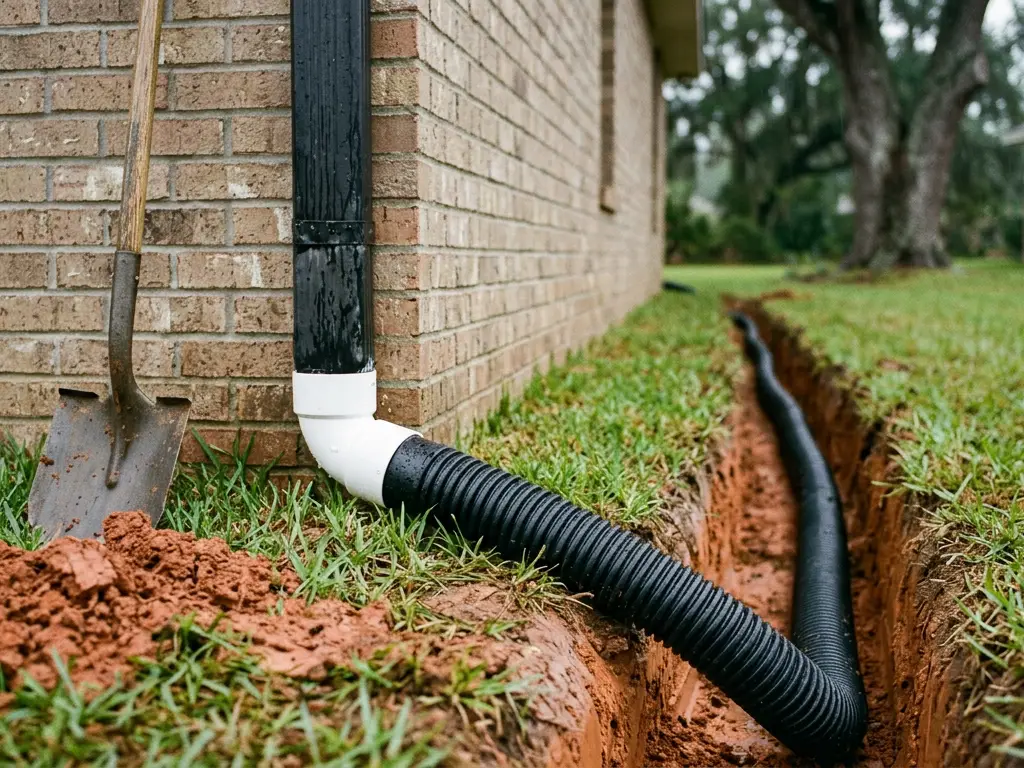
A buried emitter or one crushed by a mower is a $200 to $500 part and an hour of work, but left alone it backs the whole line up and can send a roof's worth of water into the soil beside the slab, which is how a small part turns into a $10,000 foundation problem.
$200 to $500 per emitter
Replacing or adding a pop-up emitter in Tallahassee typically runs $200 to $500 each, including locating the line, digging it out, fitting the emitter and a short length of new pipe if needed. Emitters installed as part of a new downspout or French drain line are included in that job's price.
Get a price: (850) 604-5871Signs the emitter is the problem
- The downspout overflows at the joint near the ground during heavy rain
- Water bubbles up around the downspout connector
- The emitter lid never lifts, or you cannot find it at all
- The emitter sits in a dip and the grass around it is always wet
- The lid is cracked, missing or jammed with soil
Where an emitter should sit
An emitter is only as good as its location. It has to be lower than every point of the pipe feeding it, so water can reach it by gravity. It should be at least ten feet from the foundation, on ground that slopes away, and somewhere the released water will not run back toward the house or across a neighbor's line.
In the Red Hills that is usually easy: the yard falls somewhere. On flat lots toward the south side of town, finding a spot lower than the pipe can mean running the line further than expected, or shallower, which is a trade-off worth understanding before the trench is dug.
Emitters and clay
Many emitter kits are sold with a perforated base or a gravel pocket underneath, so some water soaks into the ground before the lid lifts. In sandy soil that helps. In Tallahassee's clay-enriched subsoil, that pocket fills with standing water that has nowhere to go, and in cold snaps or dry spells it becomes a small mosquito reservoir. In clay, a solid emitter body with a small weep hole usually behaves better.
Clay also means the emitter rim needs to be set at finished grade, not proud of it. A lid standing half an inch above the lawn gets clipped by the mower within a season.
Not sure which of these your yard needs? Describe it on the phone and get a straight answer.
Call (850) 604-5871Replacing a failed emitter
The line is traced back from the downspout or the drain, the old emitter is dug out, and the pipe is checked for crushing or roots for the last few feet. The new emitter is set level at grade and backfilled with the sod replaced. A hose run into the downspout confirms the lid lifts.
If the line itself is failing, the emitter replacement becomes a French drain repair or a downspout drainage job, and it is better to know that before paying for a new cap on a broken pipe.
When one emitter is not enough
A single emitter can release only so much water. A long roof with several downspouts piped into one line can overwhelm it in a July thunderstorm. The fix is a second emitter partway down the line, a larger outlet such as a dry well or a ditch, or splitting the downspouts across two lines.
Downspout overflowing at the ground joint?
That is almost always a blocked line or a failed emitter, and it dumps roof water right beside the foundation. Call and describe it.
Call (850) 604-5871Questions people ask
How much does it cost to replace a pop-up emitter?
Typically $200 to $500 each in Tallahassee, including locating the line, digging out the old emitter, fitting the new one and replacing sod.
Why is my pop-up emitter not popping up?
The lid may be jammed with soil or grass, the emitter may sit higher than the pipe feeding it, or the line may be blocked or crushed upstream. A hose test at the downspout shows which.
How far from the house should a pop-up emitter be?
At least ten feet from the foundation, on ground that slopes away from the house and not toward a neighbor.
What are the signs my drain emitter is failing?
An overflowing downspout joint during rain, water bubbling around the connector, a lid that never lifts or cannot be found, and permanently wet grass around the emitter.
Do pop-up emitters work in clay soil?
Yes, if they sit lower than the pipe and are set at grade. In clay a solid emitter body usually works better than one with a gravel soak pocket underneath.
Often done together
-
Downspout drainage
Every downspout that dumps beside the slab is pouring a roof's worth of rain into the soil your foundation sits on. This is usually the cheapest fix on the list.
-
French drain repair
A French drain that used to work and now does nothing has usually failed in one of four ways. Finding which one decides whether it is a cleaning or a dig.
-
Dry wells
A dry well stores storm water underground and lets it soak away slowly. In the right soil it is an elegant outlet. In the wrong soil it is a buried bucket.
Talk it through before anyone digs
Describe where the water sits and where it comes from. You will hear which fix fits the yard, what it usually costs, and whether you need one at all.
Call (850) 604-5871