
When to diagnose, when to dig and when to maintain
Tallahassee Yard Drainage's Guide to the Best Time of Year for Drainage Work in Tallahassee
The best time to see a drainage problem and the best time to fix it are different seasons in Tallahassee. Here is how the year actually works.
- Tallahassee, Bradfordville and Crawfordville
- Written price before any digging
- Licensed, insured local contractors
- Priced for Red Hills clay and karst sand
Tallahassee Yard Drainage gets the most calls in July and August, when summer storms put water where nobody wants it. That is the right time to notice a drainage problem and often the wrong time to fix it. This guide lays out the Tallahassee year from a drainage point of view, so you can see the problem at its worst and fix it at the best time.
Photographing the problem in a July storm costs nothing; waiting until a dry November to try to remember where the water sat is how a $3,000 drain ends up in the wrong place and a second $3,000 job follows it.
How the Tallahassee year works for drainage
Tallahassee gets close to 60 inches of rain in a normal year, but it does not arrive evenly. Summer brings near-daily afternoon thunderstorms from roughly June through September, often dropping an inch or two in an hour. The Atlantic hurricane season runs from June through November, and the Big Bend has seen serious storms in that window. Winter brings fewer, longer frontal rains that soak the ground slowly. Spring, especially April and May, is usually the driest stretch.
Summer, to see the problem
Summer storms show a drainage problem at its worst: where water enters the yard, where it stops, how fast it moves and how long it lasts. That is what a good design needs to know. If you have a problem, the most useful thing you can do in summer is photograph it during and after a storm, with the flow direction visible, and note how long puddles last.
Urgent work still happens in summer, and should: water entering a house or a crawl space, a gully heading toward a foundation, or a failed drain backing up. Crews can dig between storms. It is just slower, muddier and harder on the lawn.
Not sure which of these your yard needs? Describe it on the phone and get a straight answer.
Call (850) 604-5871Fall and early winter, to fix it
From about October through December the ground is drier, storms are less frequent, and crews are coming off the summer rush. Red clay is much easier to trench when it is not saturated, trenches stay open without collapsing, and the site recovers faster. Warm-season sod such as St. Augustine and centipede still roots in early fall, though it slows as the weather cools.
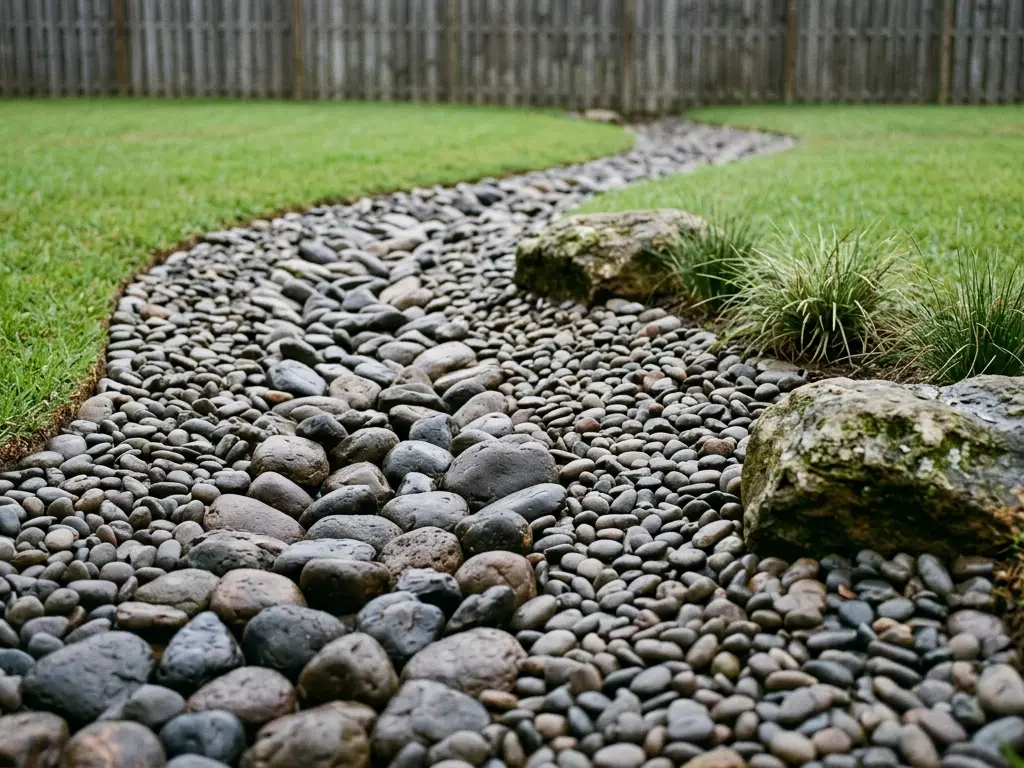
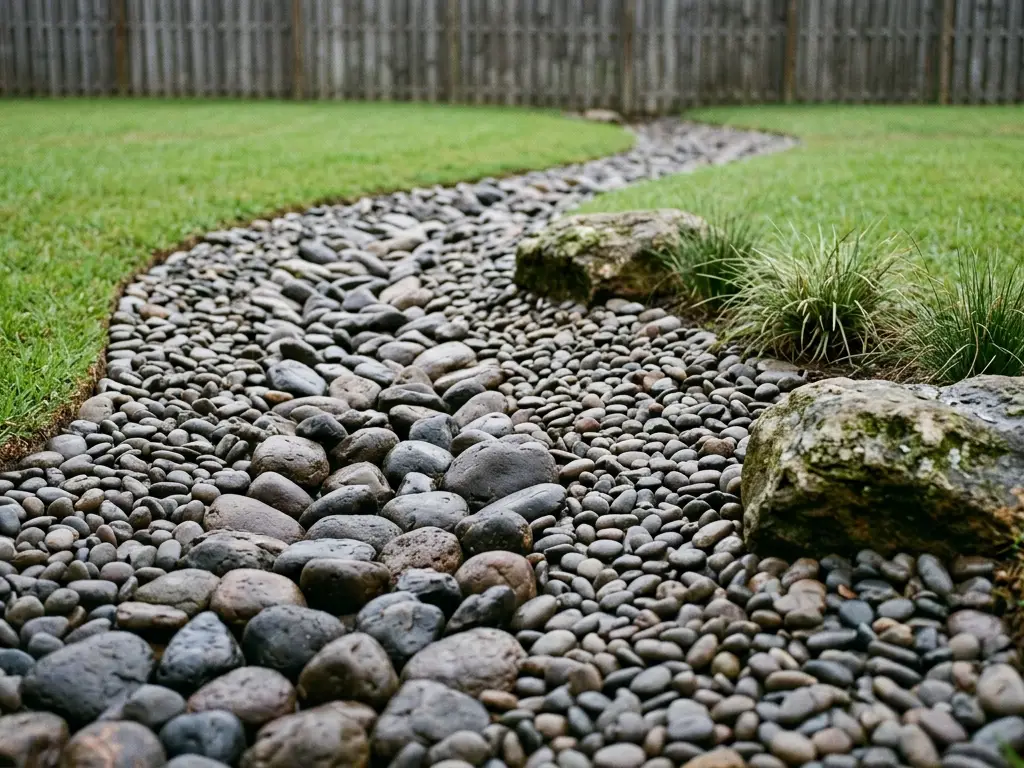
This is the sweet spot for planned work: French drains, regrading, swales and creek beds designed from what you saw in summer and installed before the next one.
Late winter and spring, for sod and slopes
Late winter works for digging but not for new sod, which sits dormant until the soil warms. Spring, from about March once the grass greens up, is a good window for jobs that end with a lot of new sod, such as a full back-yard regrade or erosion control on a slope, because the turf has the whole growing season to establish before summer storms test it.
Spring's dry spell is also the time to check whether a problem is still there. A yard that is still soggy in a dry May has a serious groundwater or clay problem.
Water getting in right now, in the middle of summer?
Then now is the right time. Urgent work does not wait for fall. Call and describe it.
Call (850) 604-5871Dry springs and drought years
A dry spring can hide a drainage problem completely. Red Hills clay shrinks and cracks when it dries, and a lawn that was a pond in August can look perfect in May. That is not the problem going away. Cracked clay also takes in the first heavy rain of summer quickly and then seals, so the first storm after a drought often looks worse than any storm the year before.
If you are deciding whether to fix something, rely on what you saw and photographed in the wet months, not on how the yard looks during a dry stretch. And if work is done in a dry spell, the design should be tested with a hose before the trench is closed, because there is no rain to test it with.
How often drainage needs attention
- Every storm season: check pop-up emitters are visible and lift, and clear leaves from catch basin grates and gutters.
- Once a year: walk the property after a heavy rain and look for new puddles, silt or erosion.
- Every few years: have long French drains near trees jetted and camera-checked; top up creek bed stone that has moved.
- After any change: a new patio, pool, addition or a neighbor's regrade can redirect water. Recheck the next time it rains hard.
Not sure which of these your yard needs? Describe it on the phone and get a straight answer.
Call (850) 604-5871Before hurricane season
By early June, clear gutters, downspout filters, emitters, catch basins and the ditch or culvert in front of the house if it is yours to maintain. A drainage system that works in a normal storm can be overwhelmed in a tropical one, but one clogged with spring pollen and oak leaves fails in the first afternoon thunderstorm. South of town, around Crawfordville, where the water table rises in a wet season, a clear roadside ditch and culvert matter more than anything in the yard.
If you are planning a French drain or regrade, booking it for the fall means it has a full winter and spring to settle before the next hurricane season.
Timing questions
What is the best time of year to install a French drain in Tallahassee?
Fall, from about October through December, when the ground is drier and easier to trench, after you have seen the problem in summer storms.
Can drainage work be done during the rainy season?
Yes, and urgent work should be. It is slower and muddier, but water entering a house should not wait for a dry month.
When is the best time to see a drainage problem?
During and just after a heavy summer thunderstorm, when you can see where water enters, collects and flows.
Does a dry spring mean my drainage problem is fixed?
No. Red Hills clay dries and cracks in a dry spring, hiding the problem. Judge it by what you saw in the wet summer months.
How often should a French drain be maintained?
Check the outlet every storm season and have long drains near trees jetted and camera-checked every few years.
What are the signs my drainage needs attention before hurricane season?
Clogged gutters and emitters, silt in catch basins, a blocked ditch or culvert, and new puddles or erosion since last year.
Talk it through before anyone digs
Describe where the water sits and where it comes from. You will hear which fix fits the yard, what it usually costs, and whether you need one at all.
Call (850) 604-5871