
From the first call to the finished trench
Tallahassee Yard Drainage's Guide to What to Expect From a Drainage Estimate in Tallahassee
Calling a stranger to look at your yard is easier when you know what happens next. Here is the whole process, step by step.
- Tallahassee, Bradfordville and Crawfordville
- Written price before any digging
- Licensed, insured local contractors
- Priced for Red Hills clay and karst sand
Tallahassee Yard Drainage wrote this guide for people who have never hired anyone for drainage work and want to know what they are signing up for when they call. It covers the phone call, the site visit, the written estimate, the permit and utility steps, install day and what to check afterwards.
Step 1, the phone call
The call takes a few minutes. You will be asked where the water collects, how long it stays, where the downspouts discharge, whether the problem is new or has always been there, and whether water is reaching the house. Then you are connected with a local contractor who works your area.
It helps to have photos taken during or just after rain, a rough idea of the size of the problem area, and your address. If water is at the foundation or in the crawl space, say so first.
Step 2, the site visit
A good drainage visit is mostly walking and looking. The contractor will want to see the whole lot, not just the puddle: where the land is high and low, where the downspouts go, what the neighbors' lots do, where the street, ditch or storm inlet is, and where the utilities probably run.
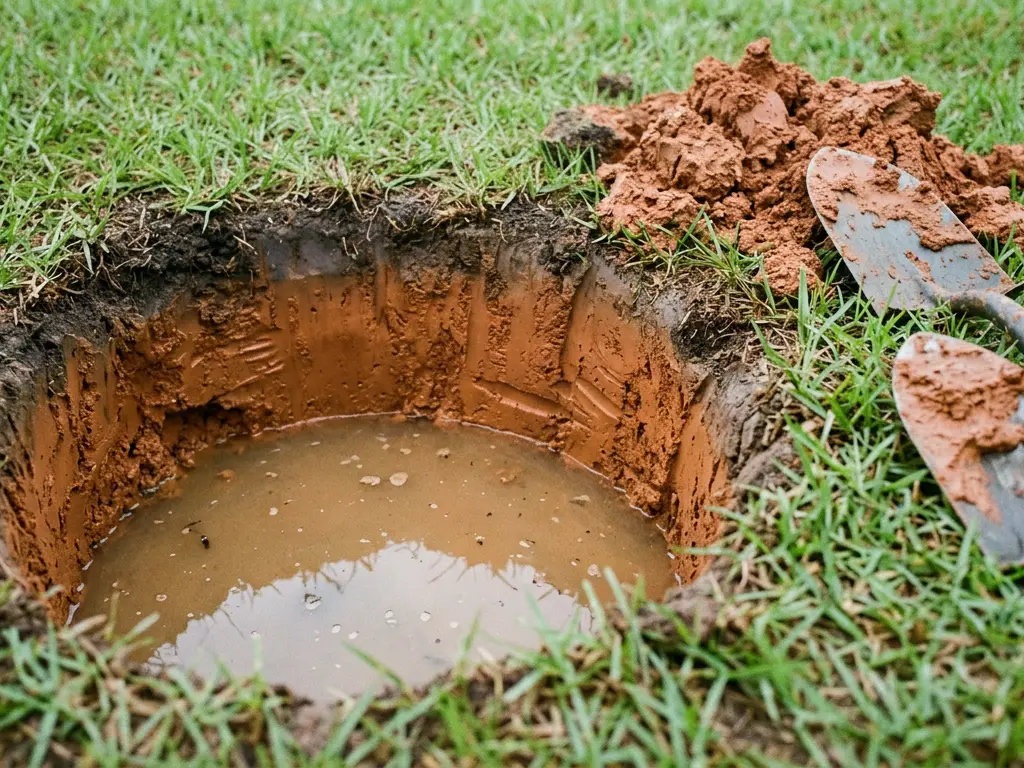
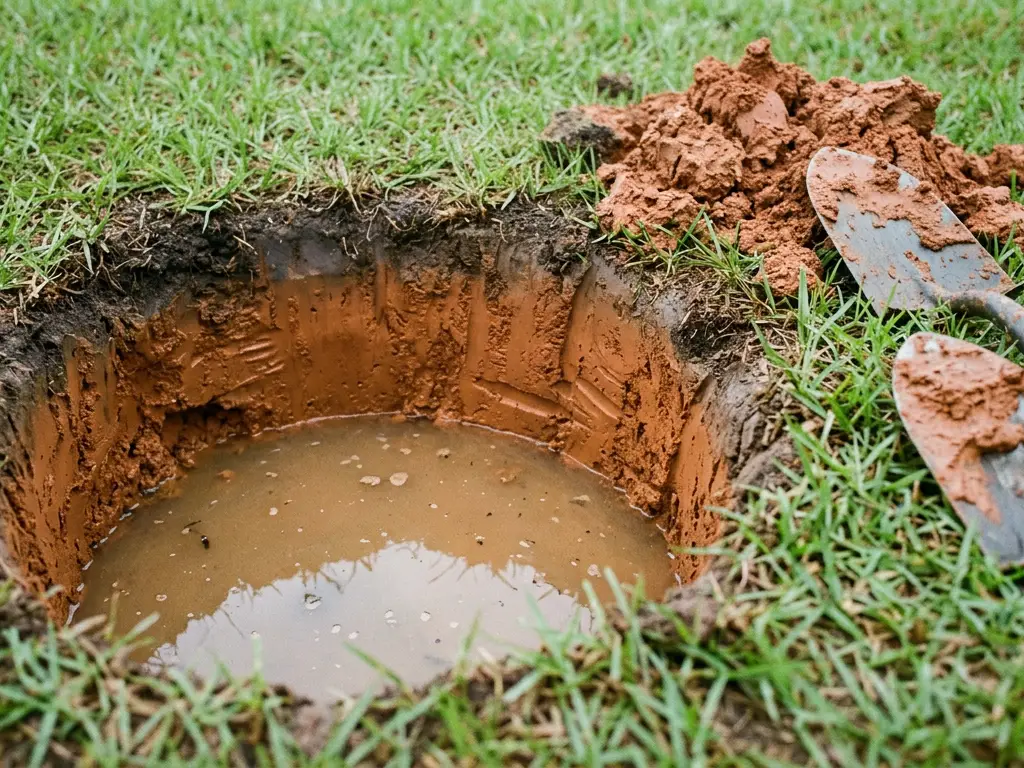
Expect a few specific checks. A test hole or two shows the soil and how it drains, which in the Red Hills usually means red loam over a clay-enriched subsoil and in the south means sand over a high water table. A level or laser measures the fall to possible outlets. Tree roots, fences, patios and access for equipment all get noted.
Visits during or soon after rain are the most informative. If it has been dry for weeks, your photos do that job.
Not sure which of these your yard needs? Describe it on the phone and get a straight answer.
Call (850) 604-5871Step 3, the explanation
Before any price, you should hear a plain explanation of why the water is there and where it can legally go. If you do not understand the cause, ask again. A fix proposed without a clear cause is a guess.
You may hear that the answer is smaller than you feared. Piped downspouts or a regrade solve a large share of problems without a French drain.
Questions worth asking during the visit
- What is causing the water, in one sentence?
- Is there a cheaper fix that might be enough, such as piping the downspouts or regrading?
- Where exactly will the water go, and is that outlet on my lot or in the right of way?
- How deep will the trench be, and what happens to the sod and the soil that comes out?
- How will I know it is working before the trench is closed?
A contractor who answers those clearly, without jargon, is telling you a lot about how the job will go. One who jumps straight to a price for the most expensive option is telling you something too.
Ready to start with step one?
It is a short call. Describe the water and you will be connected with a local contractor for a visit.
Call (850) 604-5871Step 4, the written estimate
- What is being installed, with lengths and depths
- Materials, including pipe type, stone and filter fabric
- Exactly where the water will discharge
- Sod restoration, concrete patching and spoil removal, included or not
- Who calls Sunshine 811 and who pulls any right-of-way permit
- Price, payment terms and the expected schedule
Compare any estimate against the typical ranges in our French drain cost guide. A price well below the range usually leaves something out.
Step 5, before anyone digs
Two things happen before install day. Sunshine 811 has to be notified at least two full business days before digging, and the utility companies mark their lines with paint or flags. If the job touches the right of way, such as a curb, a ditch or a driveway culvert, the City of Tallahassee, Leon County or Wakulla County permit has to be in hand.
Point out anything 811 will not mark: irrigation lines and heads, landscape lighting wires, a septic tank and drain field, a well, or a pet fence wire.
Not sure which of these your yard needs? Describe it on the phone and get a straight answer.
Call (850) 604-5871Step 6, install day
Most residential jobs take one to three days. The route is marked, sod is cut and set aside where it can be reused, and the trench is dug by machine where access allows and by hand near roots and foundations. Expect some noise, a pile of red soil on a tarp, and a crew that asks you to keep cars and pets clear.
Before the trench is closed, ask to see the system tested: water run in at the high end and seen arriving at the outlet. It takes minutes and it is the only proof the fall is right. See how a French drain installation comes together.
Step 7, after the job
Restored sod needs regular watering for the first couple of weeks. Trench lines can settle slightly after the first few rains, and a good contractor will top them up. Watch the first heavy storm: check that water reaches the outlet and that the problem area drains. Keep the pop-up emitter clear of grass and mulch.
The process is the same across the service area, from Bradfordville to Crawfordville, though the soil test and the outlet question usually come out differently on either side of the Cody Scarp.
Estimate questions
What happens during a drainage estimate?
The contractor walks the whole lot, checks high and low points, downspouts and possible outlets, digs a test hole to see the soil, explains the cause and then provides a written price.
How long does a drainage estimate take?
The site visit usually takes under an hour for a typical residential lot.
What should a drainage estimate include?
The work, lengths and depths, materials including fabric and pipe type, the discharge point, restoration, who handles 811 and permits, price and schedule.
How long does drainage installation take?
Most residential jobs take one to three days once utilities are located, which needs at least two full business days of notice.
Is the drainage estimate free?
Calling to describe the problem and hear typical costs is free. Ask the contractor about any charge for the site visit when it is booked.
What are the signs of a good drainage contractor?
They explain the cause before the fix, name a legal outlet, put everything in writing, handle 811 and permits, and test the system before burying it.
Talk it through before anyone digs
Describe where the water sits and where it comes from. You will hear which fix fits the yard, what it usually costs, and whether you need one at all.
Call (850) 604-5871