
Twelve things to look for after the next storm
Tallahassee Yard Drainage's Checklist of Drainage Problem Signs in Tallahassee Yards
Most drainage problems announce themselves long before they damage anything. Here is what to look for, what each sign usually means, and how urgent it is.
- Tallahassee, Bradfordville and Crawfordville
- Written price before any digging
- Licensed, insured local contractors
- Priced for Red Hills clay and karst sand
Tallahassee Yard Drainage hears the same descriptions on the phone every week, so this is that list written down. It is arranged from the signs that point at the house, which are the urgent ones, to the signs in the lawn, which usually are not. The best time to use it is during or just after a proper Tallahassee thunderstorm, with a phone to take photos.
Catching water at the foundation while it is still a $400 downspout problem is the whole point of this list; the same water found as a cracked slab or rotted sill a few years later is a $15,000 repair.
Signs at the house, the ones not to ignore
1. Water pooling against the foundation
Any water that stands against the slab or the block after rain is getting into the soil the house rests on. In the Red Hills, the clay-enriched subsoil swells and shrinks with moisture, so uneven wetting pushes on a foundation unevenly. First suspects: downspouts and grading.
2. Water in the garage or under the house
Water under the garage door usually means the driveway or apron slopes toward it. Water in a crawl space usually means the yard sends water toward the foundation. Both are worth fixing before the next storm season. See foundation drainage.
3. New cracks, sticking doors, efflorescence
Cracks in brick veneer or drywall corners, doors that start to stick on one side of the house, and white powdery deposits on block near the ground can all follow years of water at one side of a foundation. Drainage fixes the cause. A structural engineer assesses the damage.
4. Splashback and rot at the base of walls
Red mud splashed up brick or siding, peeling paint and soft trim near the ground mean water is landing right beside the wall, usually from a downspout or a roof valley with no gutter.
Signs in the yard that say the water has nowhere to go
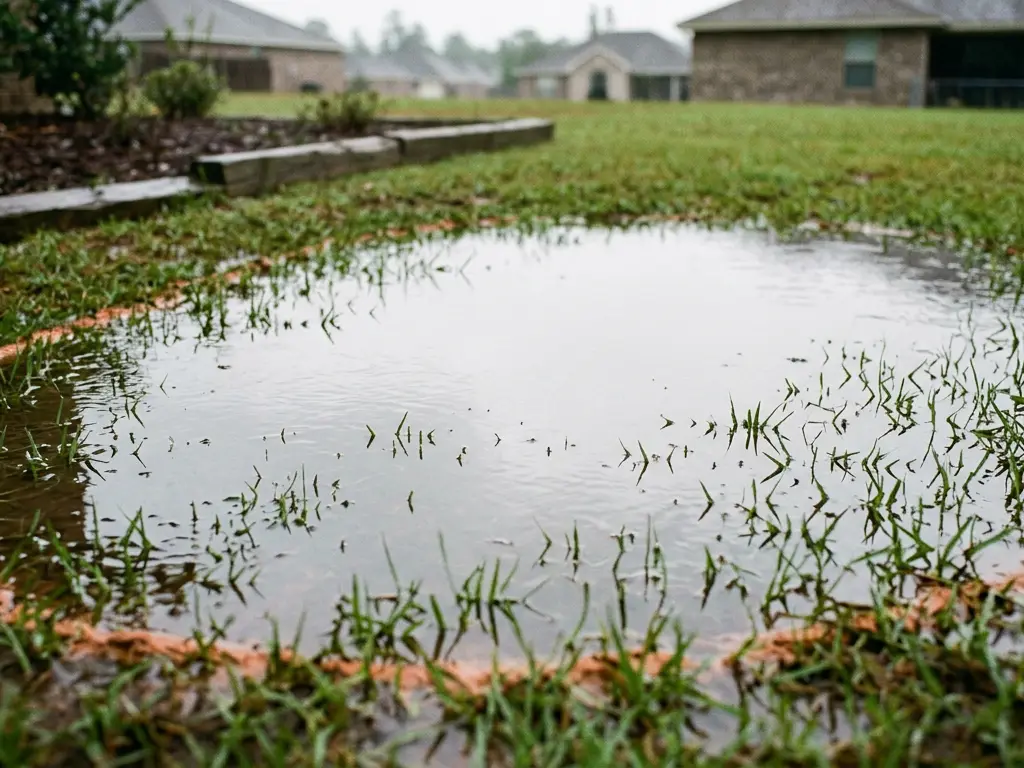
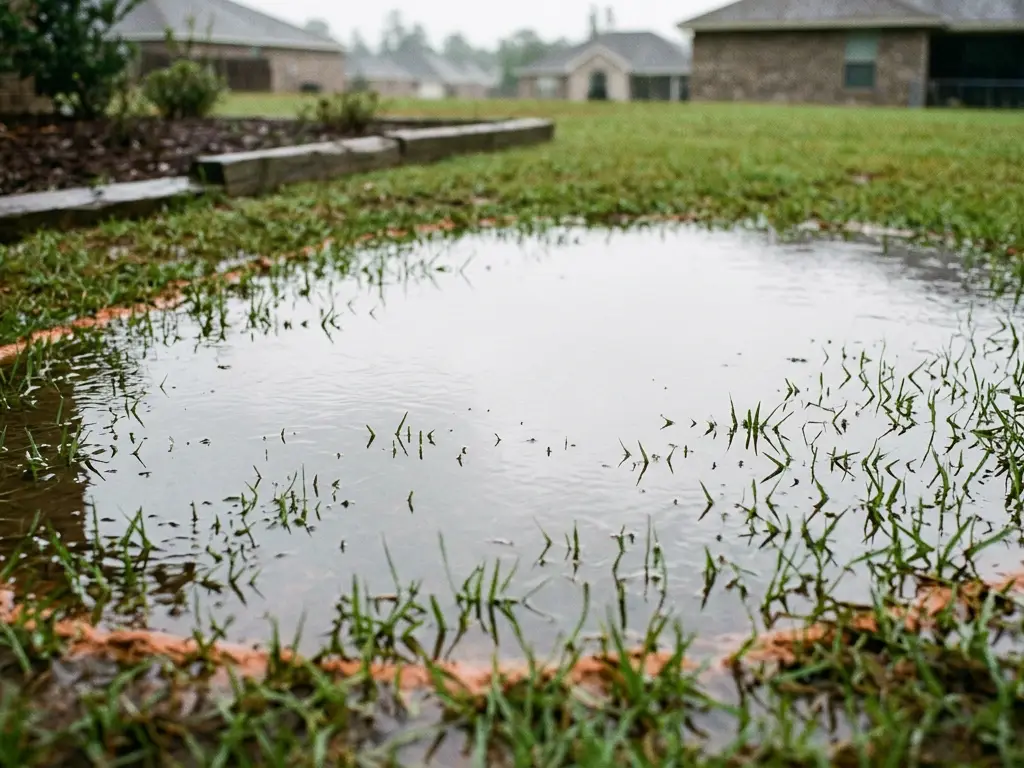
5. Puddles that last more than a day
A healthy lawn should be clear of standing water within a few hours of a normal rain. Water still there the next day means a low spot, clay subsoil or a high water table.
6. Footprints that fill with water
If the ground squelches and your footprints fill up, the top few inches are saturated. In the Red Hills that usually means water has stalled on the clay layer beneath.
7. Moss, algae, sedge and bare patches
Turf grasses struggle in soil that stays wet. Moss, a green film of algae and sedge moving in where grass used to grow is the lawn telling you it has been wet for weeks.
8. A soggy strip that never dries
A narrow band of wet lawn along a fence, a side yard or the bottom of a slope is often water travelling underground and surfacing. That pattern is classic French drain territory.
Not sure which of these your yard needs? Describe it on the phone and get a straight answer.
Call (850) 604-5871Signs that water is moving where it should not
9. Red mud on the driveway or sidewalk
Silt fanned across a hard surface after rain means runoff is crossing it, taking soil with it. Left alone, that becomes erosion.
10. Gullies and exposed roots
A channel cut into a slope gets deeper every storm. Exposed roots on a bank that used to be covered mean soil is leaving.
11. Downspouts dumping onto the lawn
Not a symptom exactly, but the most common cause of several of the symptoms above. A bare, muddy fan below each downspout is the tell.
12. A drain that used to work
A French drain or pop-up emitter that has gone quiet during rain has failed somewhere. The outlet is the first place to look.
Signs that look like drainage and are not
Water that appears when it has not rained usually points to an irrigation leak or a broken water line. A wet patch with a sewage smell near a septic system is a septic problem, not a drainage one. And a lawn that is simply dry and patchy under oaks is shade, not water. Rule these out before paying for drainage work.
Ticked anything in the first four?
Signs at the house are the ones to act on now. Call and describe what you found.
Call (850) 604-5871North of town and south of town
The same signs mean different things on either side of the Cody Scarp. In the Red Hills, most of the city and places like Bradfordville, standing water usually means clay subsoil, slope and grading. South of the scarp, around Woodville and Crawfordville, it more often means a high water table on sandy ground. The fixes differ, which is why describing where you live matters when you call.
What to do with the list
Walk the property during or just after a heavy rain. Photograph anything on this list with the water visible and, if you can, the direction it is flowing. Note how long puddles last. Then start with the cheapest likely cause: downspouts first, then grading, then drains. That order solves a surprising share of Tallahassee drainage problems before any trench is dug.
Not sure which of these your yard needs? Describe it on the phone and get a straight answer.
Call (850) 604-5871Drainage warning sign questions
What are the signs of poor drainage in a yard?
Puddles lasting more than a day, footprints that fill with water, moss and sedge replacing grass, soggy strips, mud on hard surfaces, gullies and downspouts dumping onto the lawn.
When is a drainage problem urgent?
When water reaches the house: pooling at the foundation, entering the garage or crawl space, or showing up as new cracks or rot near the ground.
How long should water stand in a yard after rain?
Only a few hours after a normal rain. Water still there the next day indicates a drainage problem.
Why is my yard wet when it has not rained?
Usually an irrigation leak or a broken water line, or occasionally a septic problem. Rule those out before assuming drainage.
Is moss in my lawn a sign of a drainage problem?
Often. Moss, algae and sedge move in where soil stays wet for weeks. In deep shade under oaks, moss can also simply mean too little light, so check whether the ground is wet as well.
What should I check first?
The downspouts. Roof water dumped beside the house causes more drainage problems than anything else and is the cheapest fix.
Talk it through before anyone digs
Describe where the water sits and where it comes from. You will hear which fix fits the yard, what it usually costs, and whether you need one at all.
Call (850) 604-5871